This project explores the dialogue between classical architectural proportions and contemporary material precision. Framed by tall arched windows and detailed ceiling cornices, the interior balances historical references with modern restraint. The design language is composed rather than decorative — emphasizing geometry, surface contrast, and tactile richness.
SCOPE
Full Architectural Design, Finishing Selections
Full Interior Design, Custom Fabrication and Furnishing
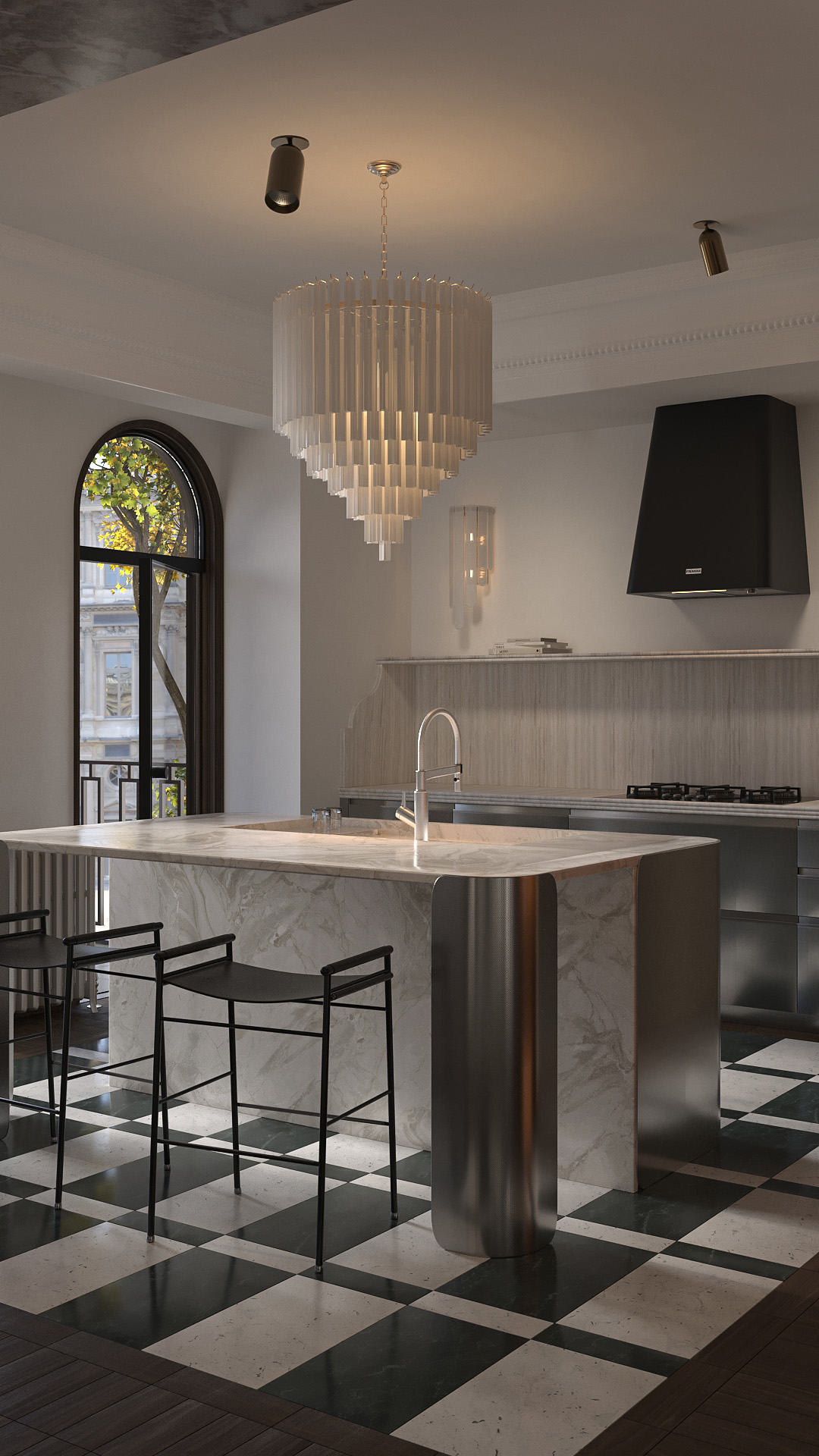
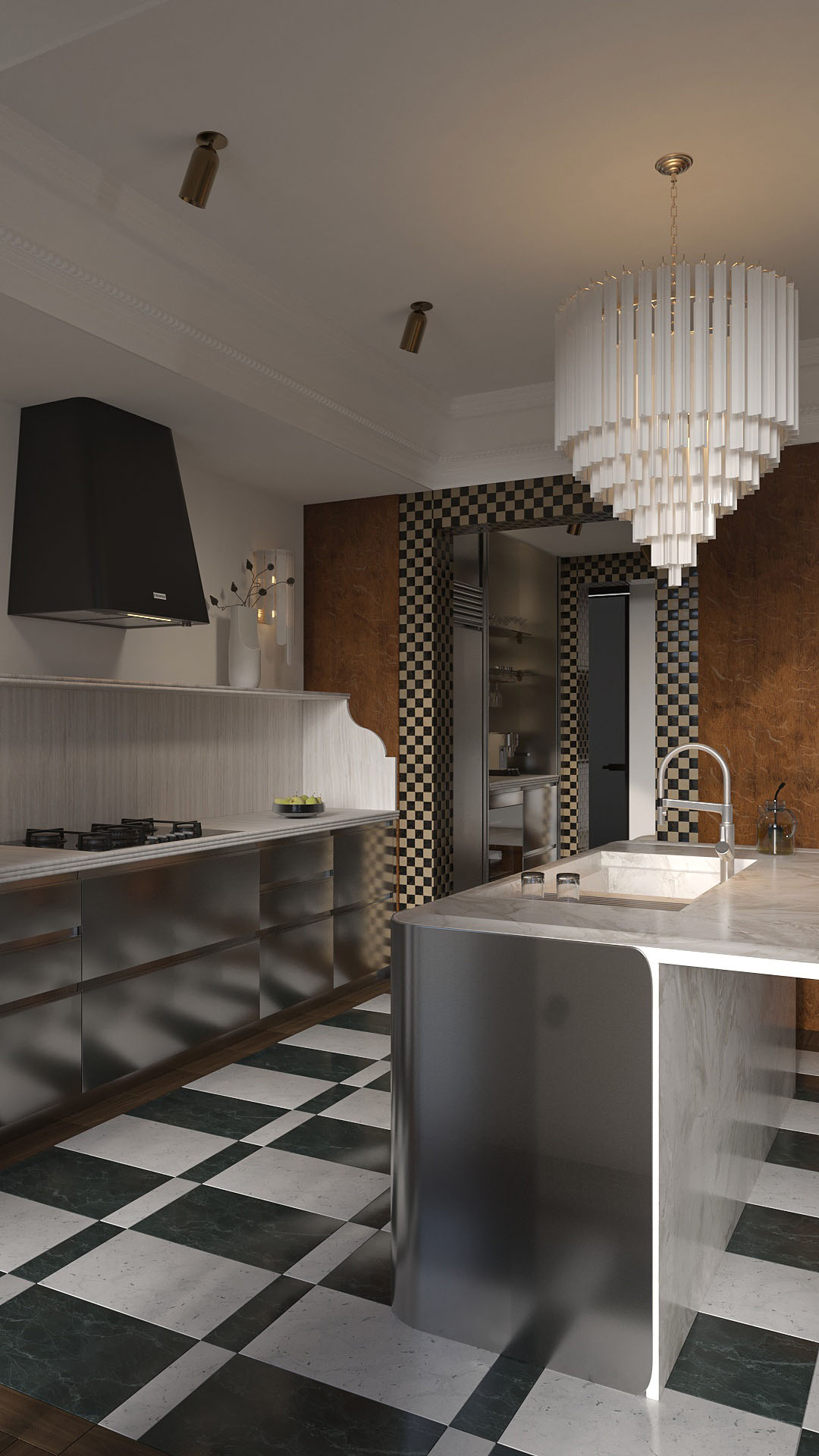
In the Project, the kitchen designed as a sculptural core shaped by contrast and precision. A monolithic island wrapped in light-toned marble anchors the space, its mass softened by curved brushed stainless steel edges that introduce a refined industrial clarity. The black-and-white checker stone flooring provides a graphic classical foundation, grounding the composition with rhythm and proportion.
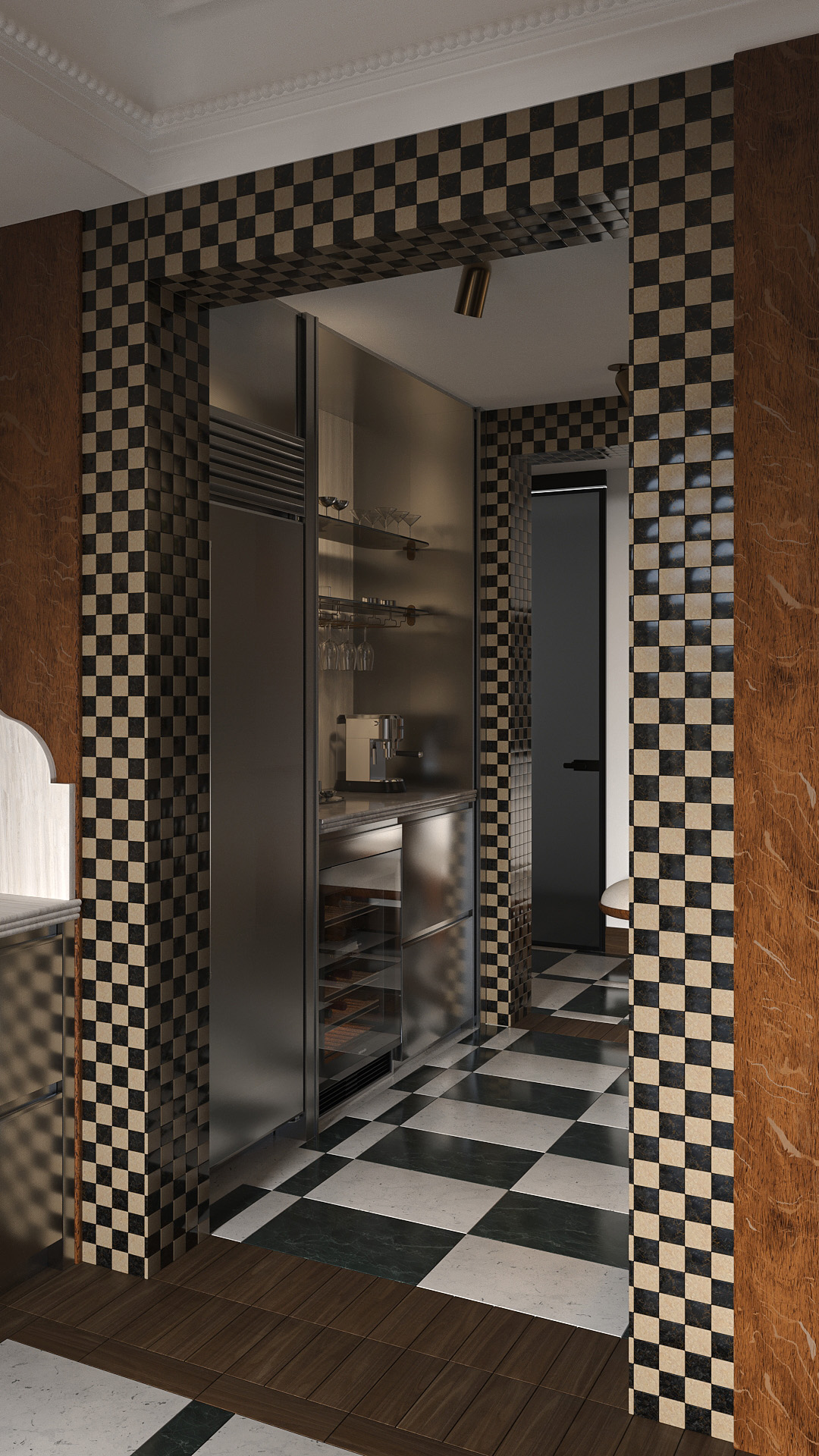
Above, the tiered glass chandelier descends like a luminous architectural element, casting warm light across marble and steel surfaces, while the matte black hood reads as a controlled, floating volume. The checker-framed portal extends the floor pattern vertically, transforming transition into gesture. Warm veined wood panels temper the metallic palette, allowing marble, steel, and stone to define hierarchy through texture rather than walls. The result is a modern classic kitchen — composed, material-driven, and quietly confident.
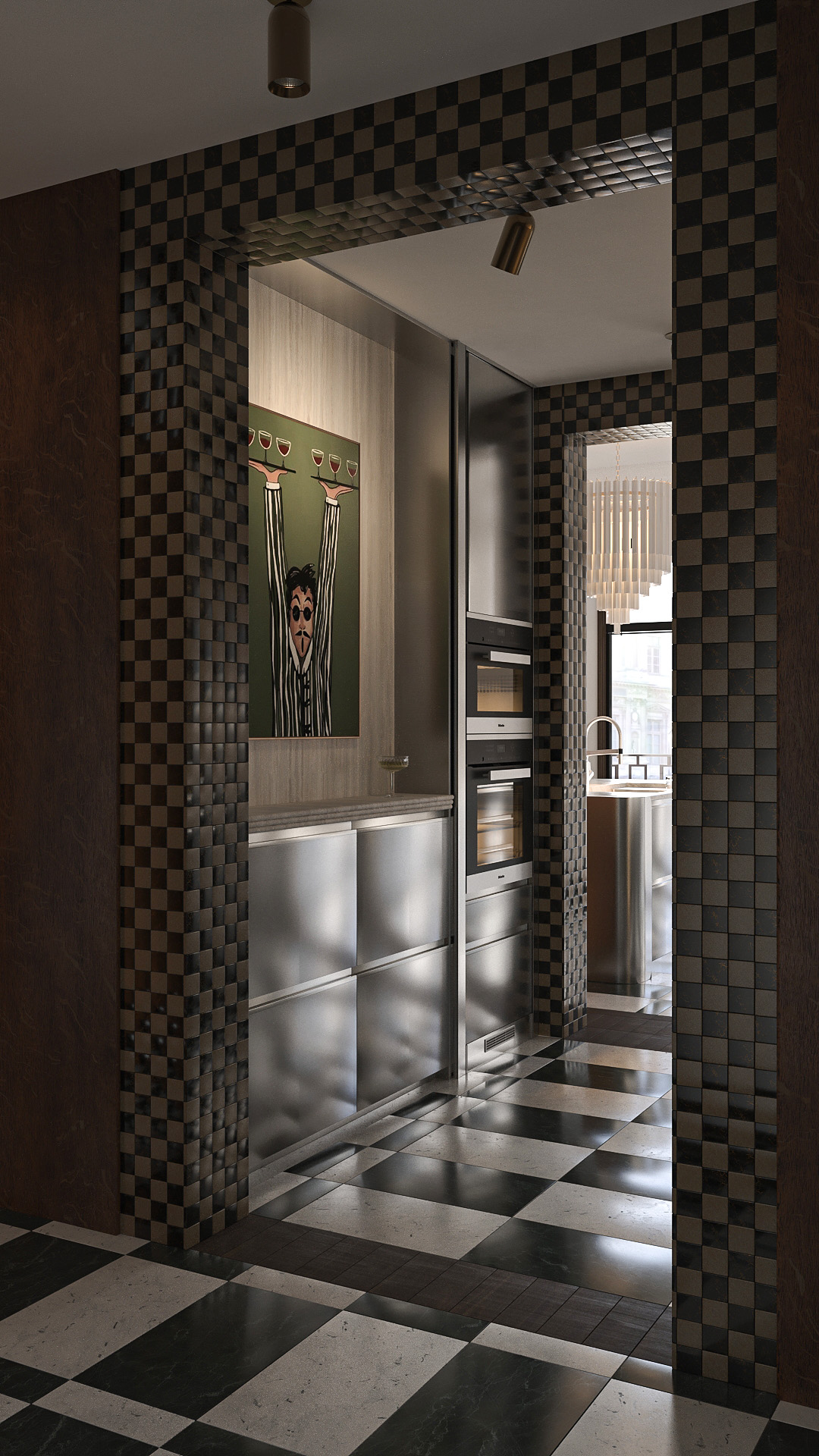
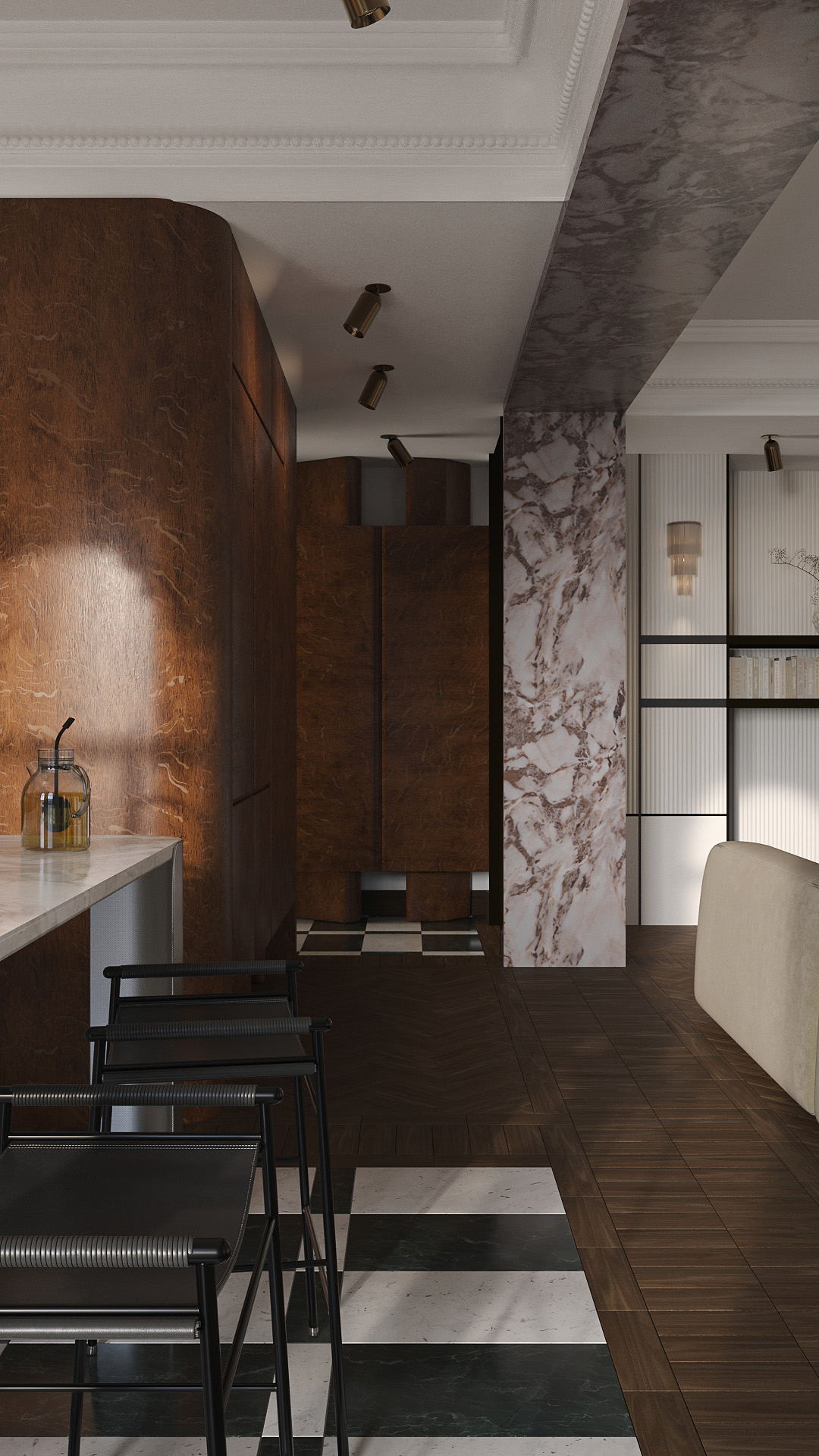
The checker-clad portal frames the kitchen threshold as a deliberate gesture, extending the graphic floor pattern vertically and transforming movement into composition. Stainless steel cabinetry reflects light with controlled softness, reinforcing the kitchen’s industrial precision, while warm veined wood panels temper the metallic coolness. The corridor beyond maintains the checker rhythm, creating visual continuity and depth. The space feels structured yet dynamic, where material contrast — stone, steel, and wood — defines hierarchy without ornament.
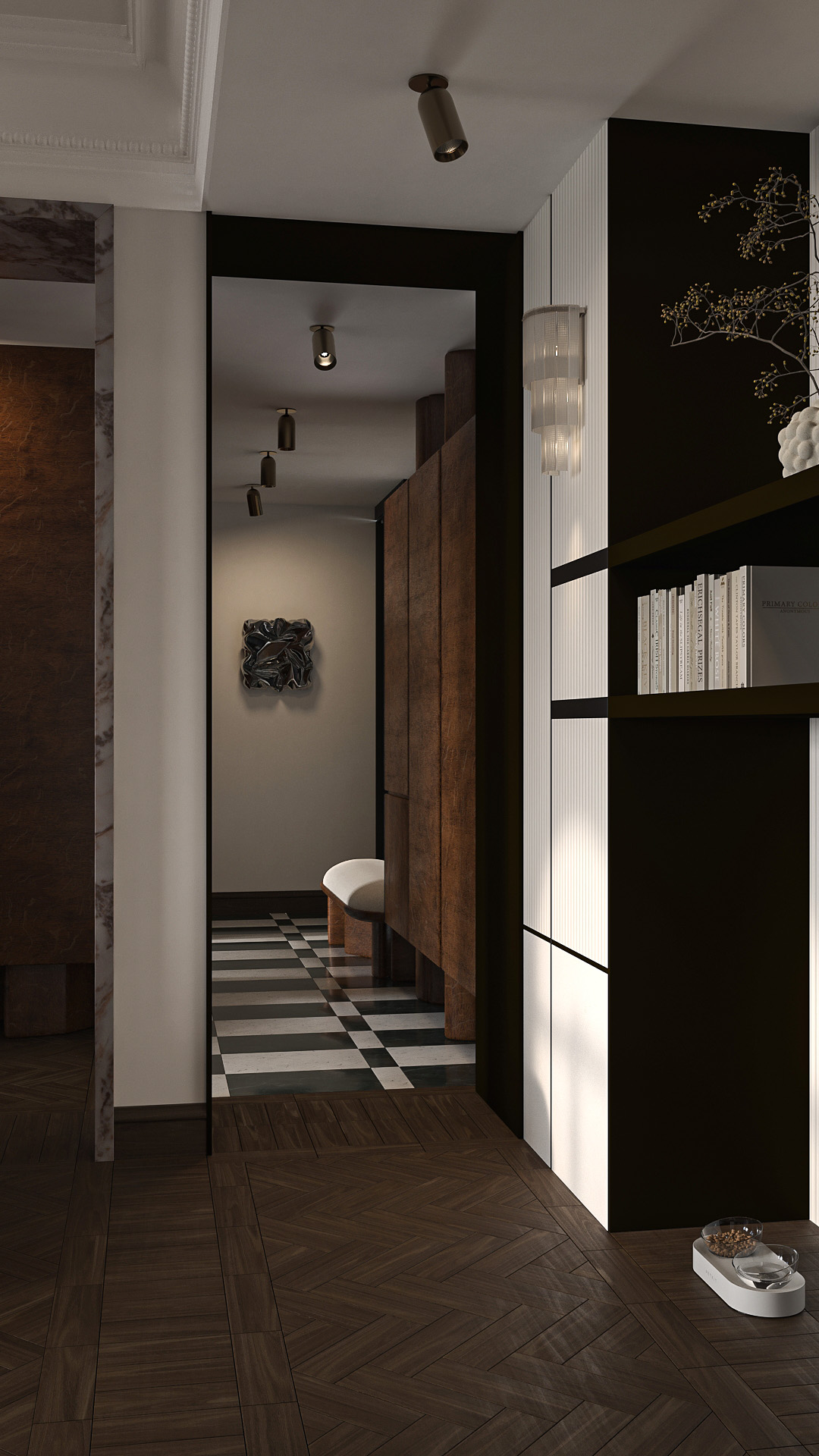
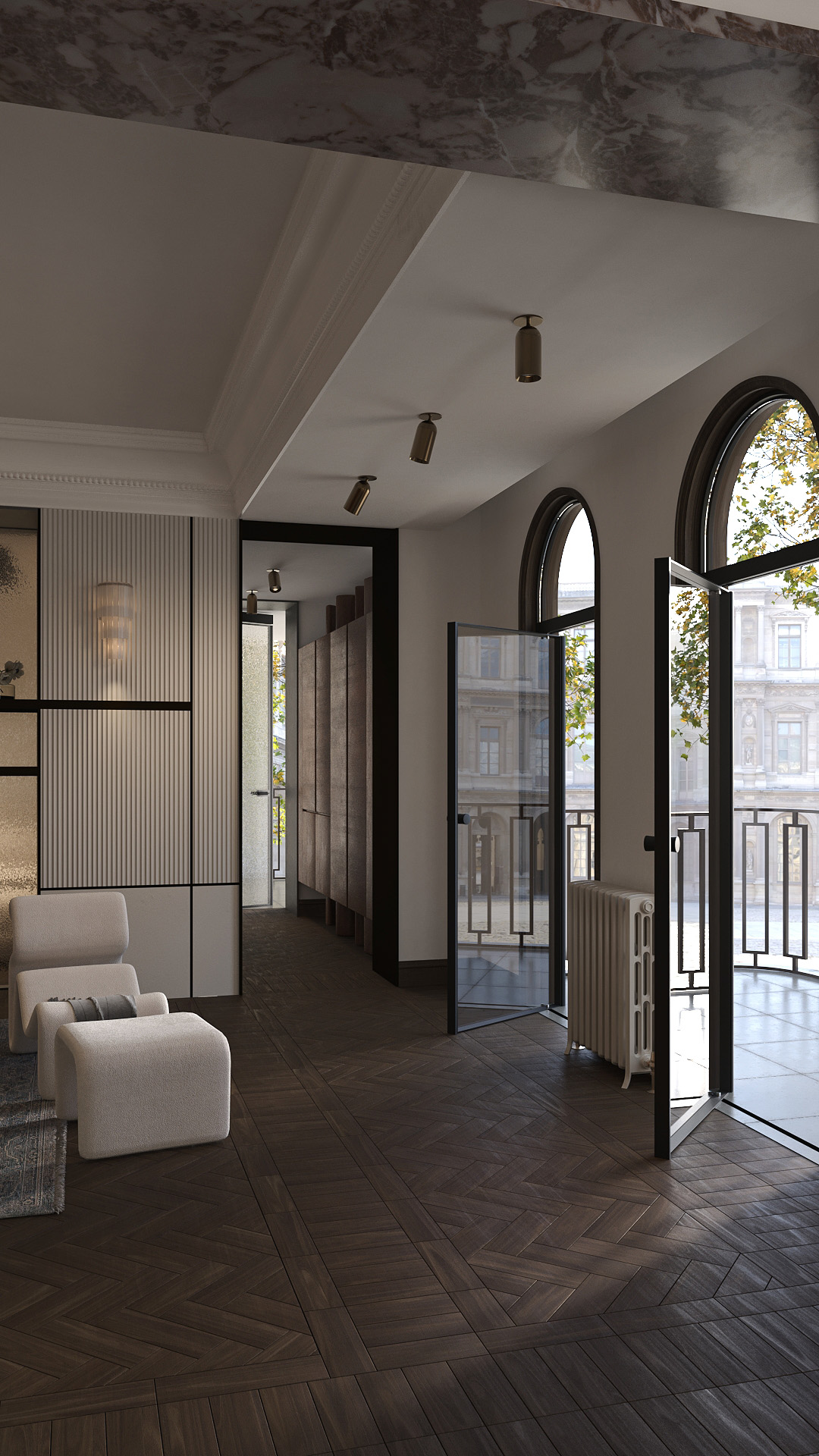
Dark herringbone parquet introduces warmth and grounding, dissolving the graphic boldness of the kitchen into a softer residential tone. Ribbed wall panels intersected with black framing lines create a refined grid backdrop, while integrated shelving and layered lighting add depth without visual noise. The corridor’s warm wood cabinetry continues in the distance, subtly echoing the kitchen palette. Here, texture replaces pattern, and proportion replaces statement — resulting in a composed modern classic interior shaped by rhythm, contrast, and material restraint.
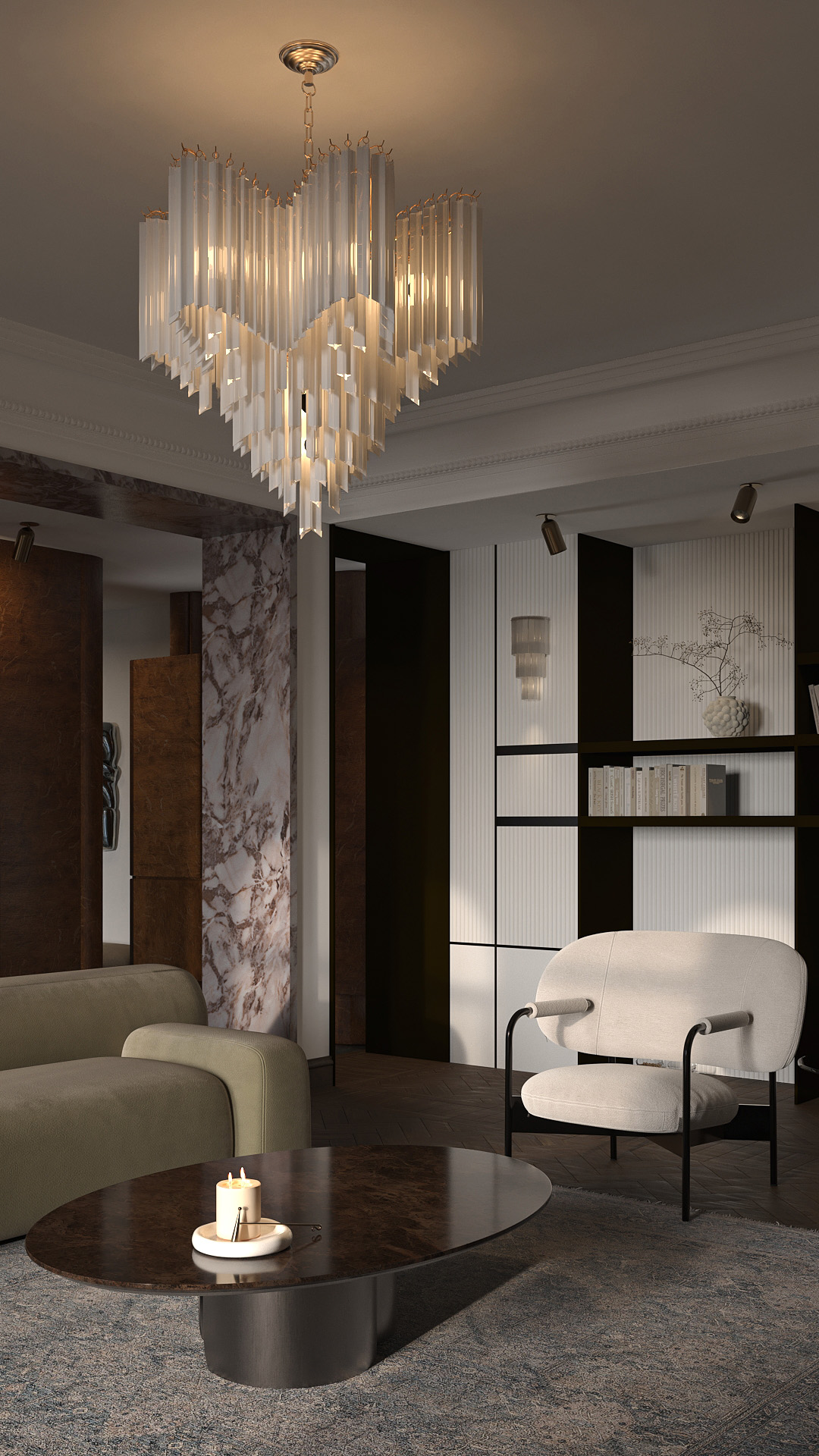
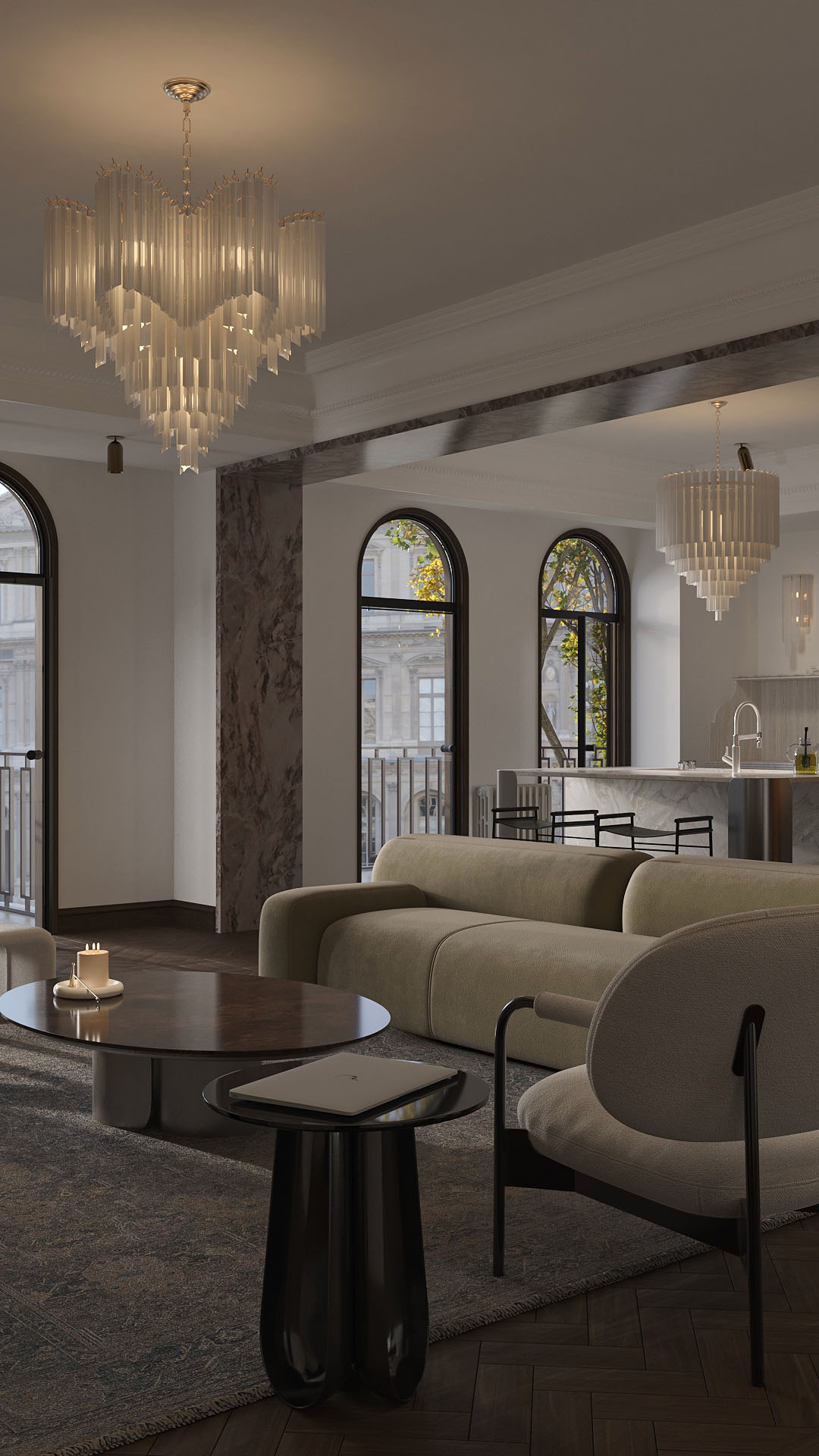
Sculptural seating in muted, tactile upholstery introduces rounded geometry against the room’s structured architectural framework. A low, dark wood coffee table with solid cylindrical presence anchors the composition, layered over a textured rug that subtly diffuses light and shadow.
Above, the tiered glass chandelier descends as a luminous focal element, its vertical rhythm echoing the height of the arched windows and classical cornices. Marble-clad structural elements and black-framed ribbed wall panels add architectural clarity, while integrated shelving and restrained decor maintain visual balance. Natural daylight filters through tall arched openings, reinforcing the modern-classic dialogue between historic proportion and contemporary restraint.
The living area reads as calm yet deliberate — shaped by material contrast, sculptural silhouettes, and controlled lighting, rather than excess.
Within the living area, sculptural seating in textured neutral upholstery contrasts with the architectural grid of ribbed wall panels and black framing lines. Integrated shelving becomes part of the composition rather than decoration, balancing solid and void with restraint. The chandelier descends as a luminous focal point, its vertical glass rhythm echoing the classical cornices and arched openings. Warm light diffuses across wood, marble, and fabric, enhancing surface depth.
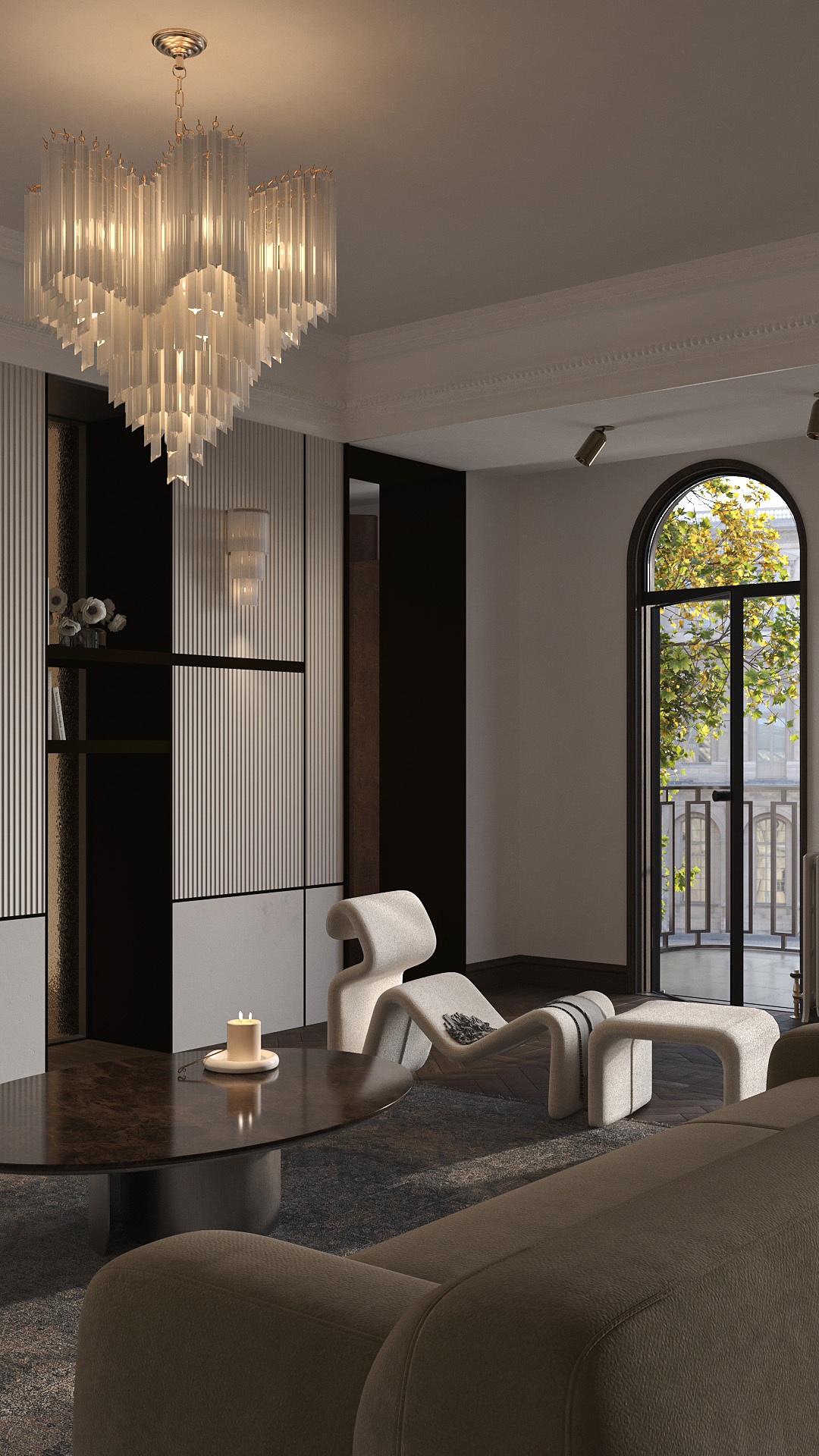
The open arched doors extend the interior toward the exterior façade, allowing daylight to interact with the darker parquet flooring and reinforcing the modern-classic tension. Soft curves of the chaise and lounge seating temper the room’s structured geometry, resulting in a space that feels composed, tactile, and quietly confident — shaped by material precision and architectural clarity rather than ornament.
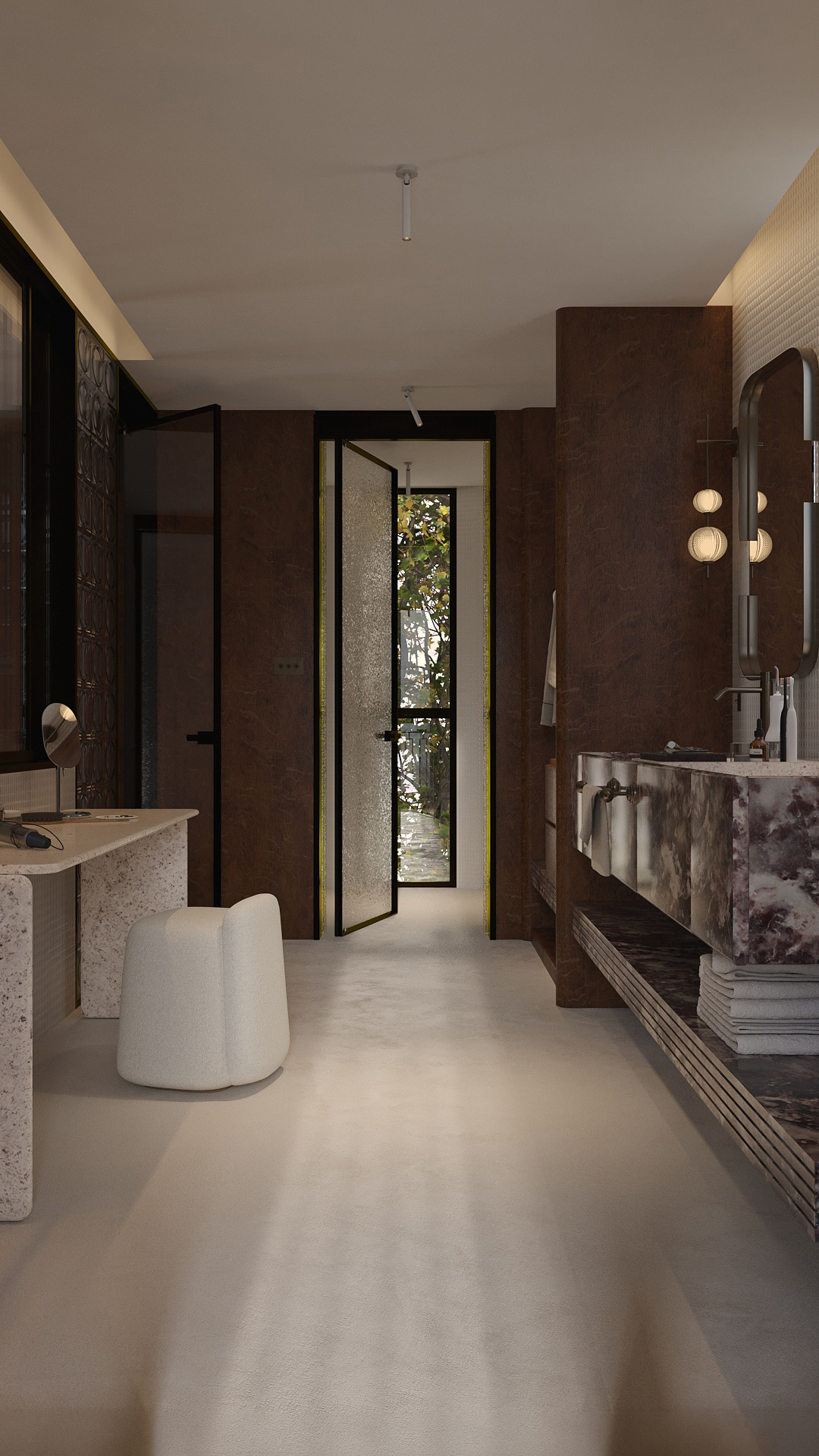
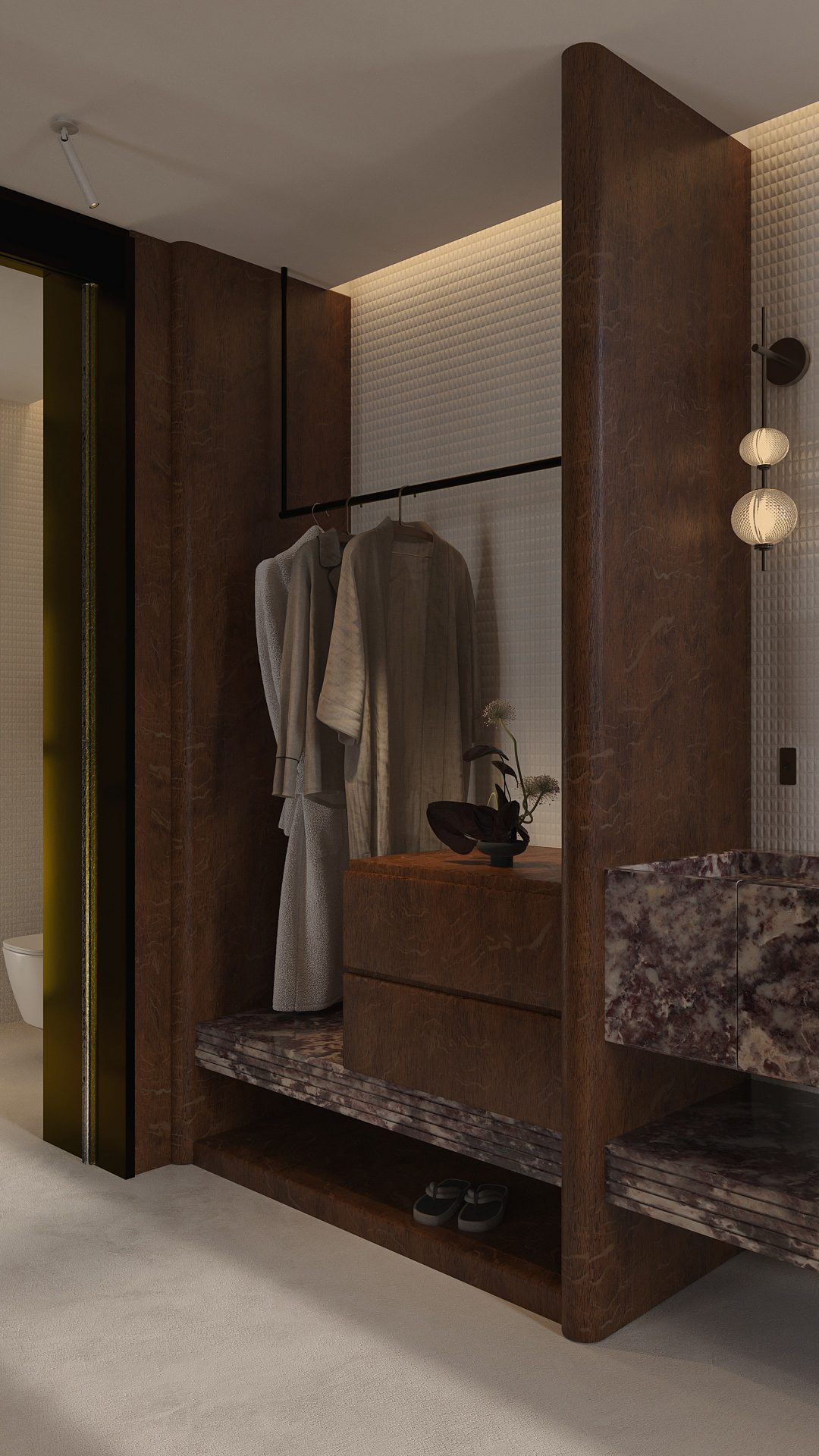
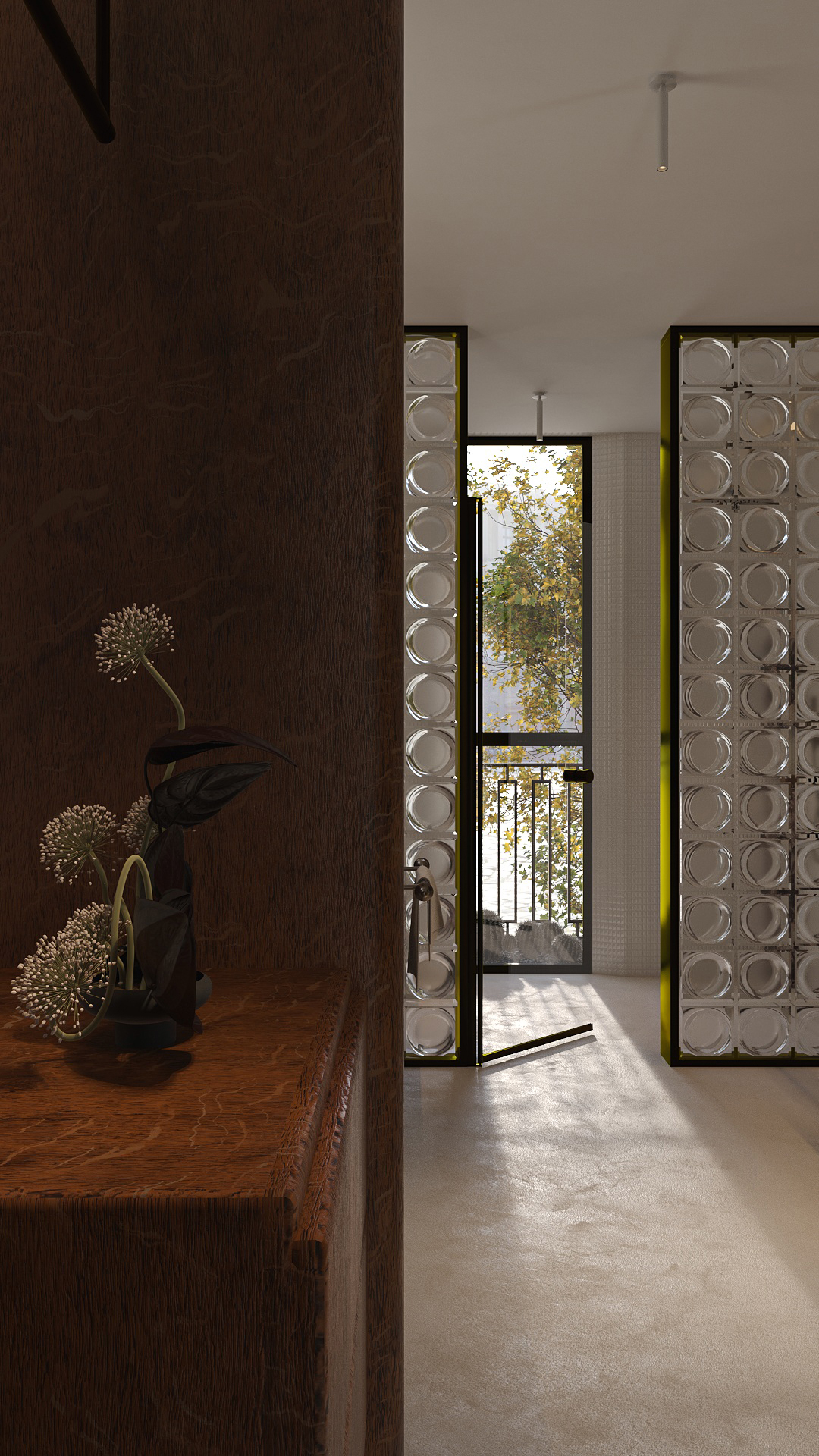
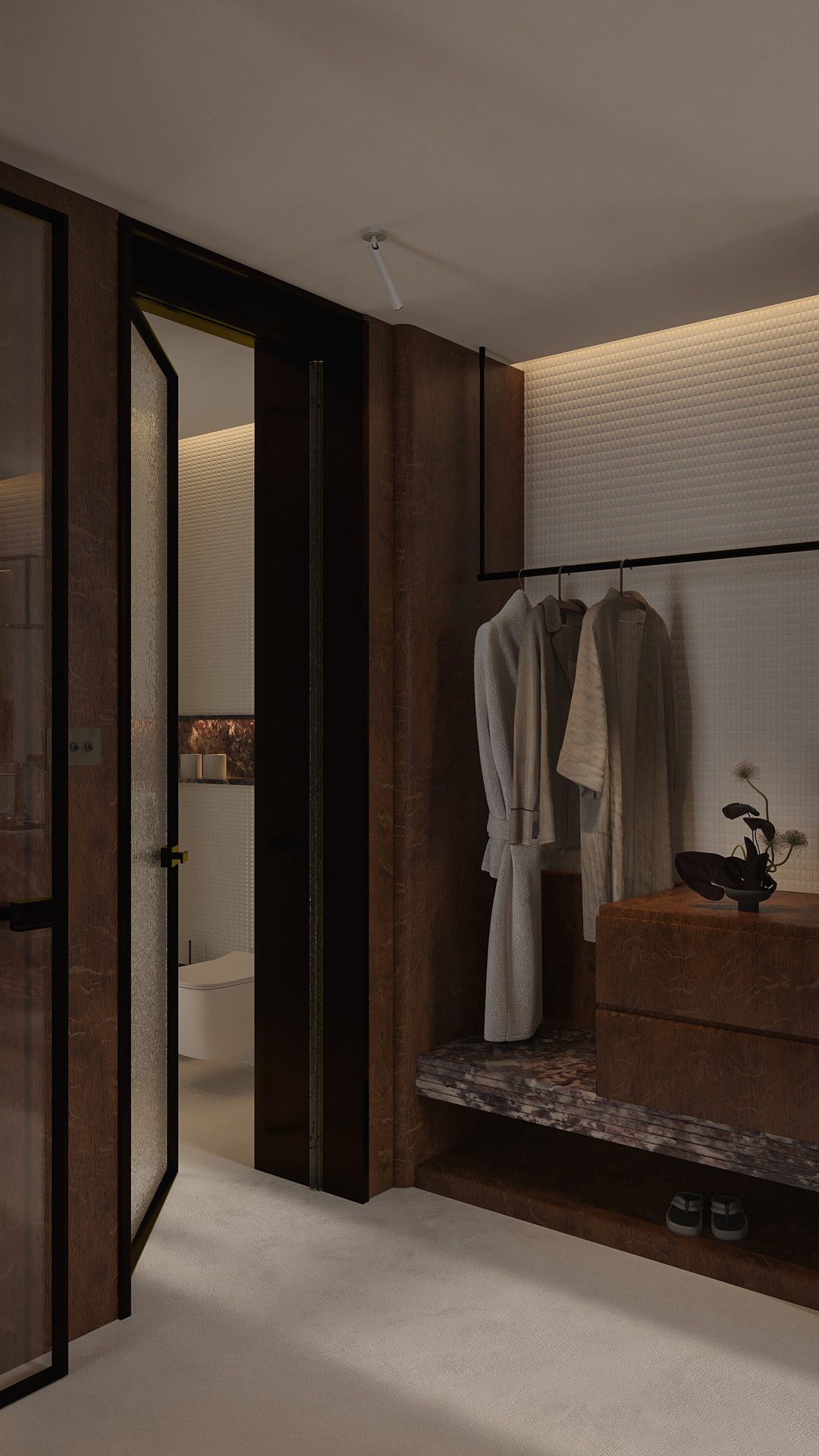
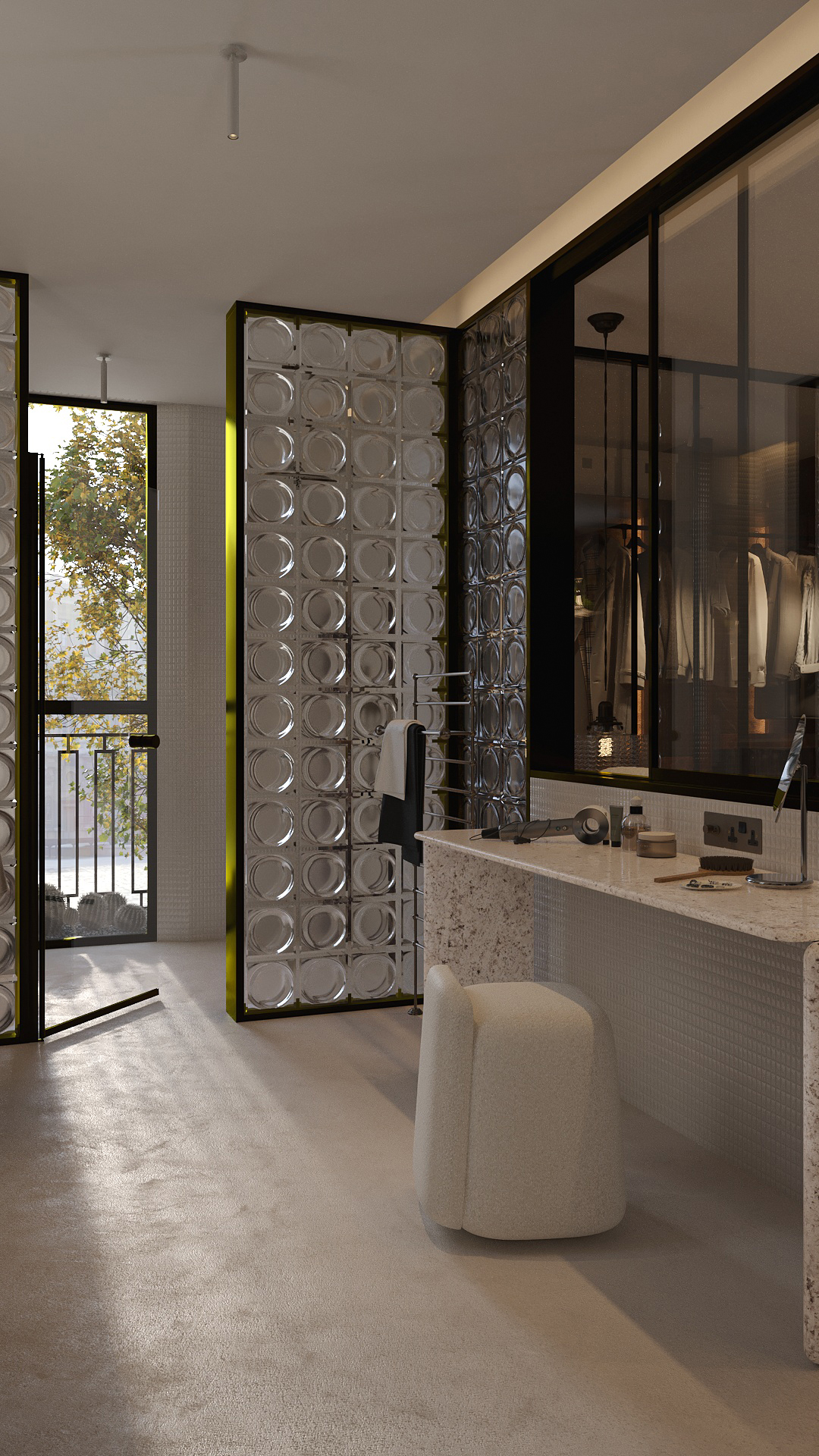
Defined by a refined interplay of deep timber tones, textured stone, softly reflective glass blocks, and muted mineral surfaces, this wet space was designed to feel both grounded and atmospheric. Natural light is gently diffused throughout the room, enhancing its warm, tranquil character and reinforcing a sense of understated elegance.
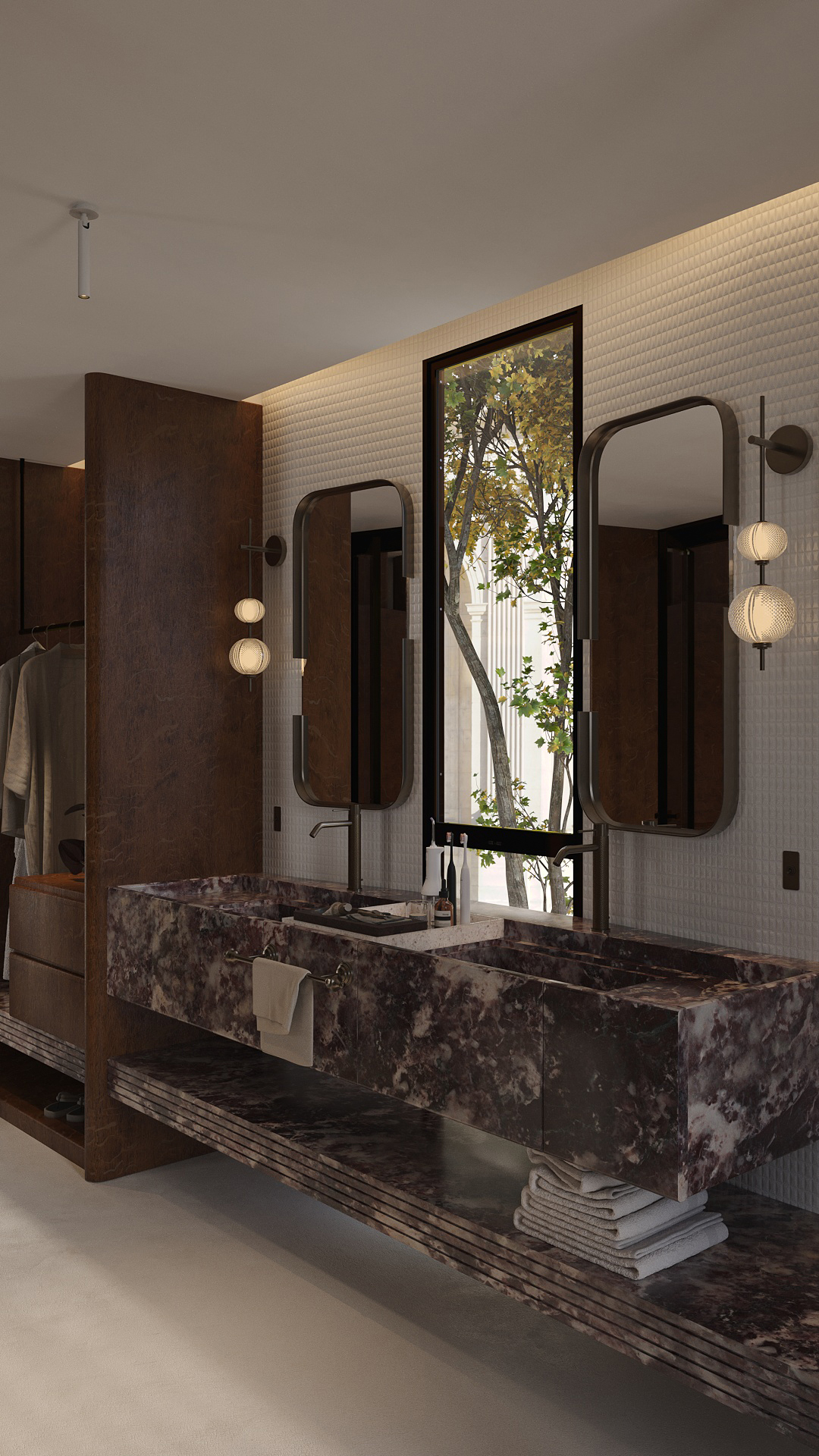
This part of the wet space was conceived as a seamless extension of the daily ritual, where rich timber joinery, expressive stone surfaces, softened textures, and filtered daylight come together in a calm and immersive composition. The material palette was designed to create a feeling of warmth, tactility, and quiet elegance, balancing function with a more intimate, retreat-like atmosphere.
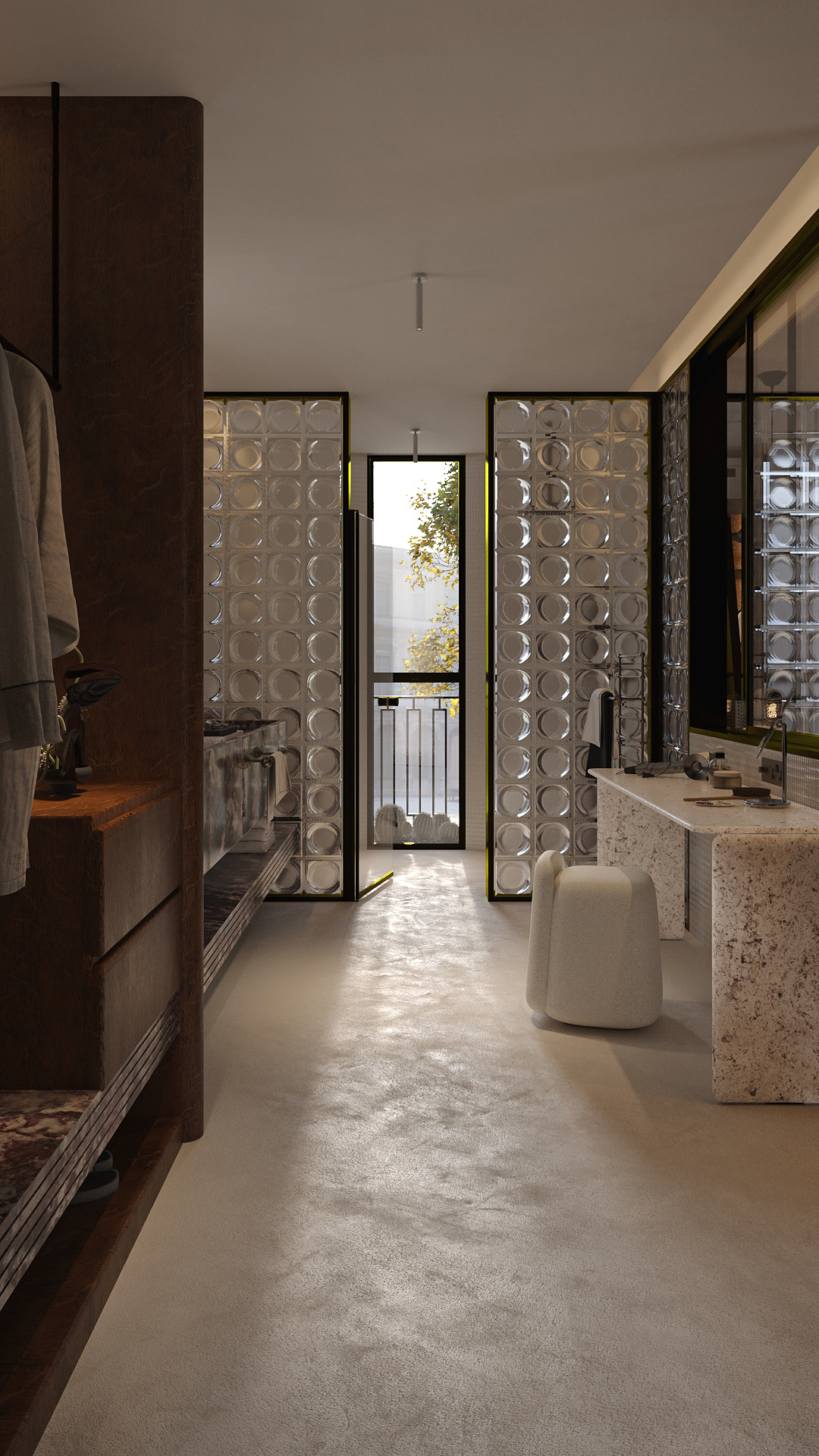
Shaped through the interplay of translucent glass, mineral surfaces, dark frames, and richly textured stone, this space was designed to feel both open and grounded. Natural light is softly diffused, revealing the depth of materials while reinforcing a warm, serene, and understated atmosphere, where sculptural forms and clean lines coexist in quiet balance.